CHILE
Location Sites: Topocalma, Puertecillo and Punta de Lobos
Save The Waves has been collaborating with Chilean non-profits Fundación Rompientes and Corporación Parque Punta de Lobos to create a Surf Protected Area Network in Chile.
Save The Waves hopes that the Piedra del Viento Coastal Marine Sanctuary and Punta de Lobos is an inspiring new approach to marine and coastal conservation around the world. Within Latin America, Save The Waves will continue working with our grassroots partners to establish Surf Protected Areas Networks.
The declaration of a Coastal Marine Sanctuary is only the first step to recognize the invaluable characteristics of this place. The plan moving forward is to conserve biodiversity and promote sustainable development of the area.
Felipe Rodríguez
Co-Director Fundación Rompientes
PROJECTS AND LOCAL PARTNERS
PUNTA DE LOBOS
Punta de Lobos was established as a World Surfing Reserve in 2017 after years of efforts under the “Lobos Por Siempre” campaign.
In Punta de Lobos, together with our local partners of Corporación Parque Punta de Lobos, we will:
Help to consolidate a coalition with outreach and engagement with local surf communities and key stakeholders on protected areas and legal protection of waves
Improve stewardship at Punta de Lobos and other protected areas
Explore sustainable financing opportunities for long-term management for new and existing coastal protected areas, using surfing as a vehicle.
To learn more about our partners Corporación Parque Punta de Lobos, visit www.puntadelobos.org
PIEDRA DEL VIENTO
The Piedra del Viento Coastal Marine Sanctuary is one of the first protected areas to consider wave protection and surfing into the planning process and management plan in Chile. It is one of the first surf ecosystems to be listed under Save The Waves’ Surf Protected Area Networks program and includes classic surf spots Topocalma and Puertecillo.
Located on Chile’s central coast, the protected area is a direct result of the partnership of Fundación Rompientes and Save The Waves Coalition. The Sanctuary will protect approximately 10,000 acres of coastal, marine, and land area, as well as six surf breaks. This declaration of the Sanctuary also preserves and promotes the cultural heritage related to the practice of collecting seaweed from the shoreline which dates back 300 years.
At a national level, Fundación Rompientes participates in groups such as Observatorio de la Costa and Costa Chile, which bring together academics and NGOs to discuss public policies related to the coastline.
To learn more about our partners Fundación Rompientes and the Piedra del Viento Marine Sanctuary, visit www.rompientes.org.
PROTECTED AREAS: LATEST NEWS

Surf, Solidarity, and Sustainability on Mexico’s Oaxacan Coast: The Cooperativa Surf Huatulco Project
How a cooperative created protocols, manuals, and alliances to defend waves, beaches, and marine life while driving a sustainable coastal model
On the Ground Update: Two Major Wins for Surf Ecosystem Protection in Mexico
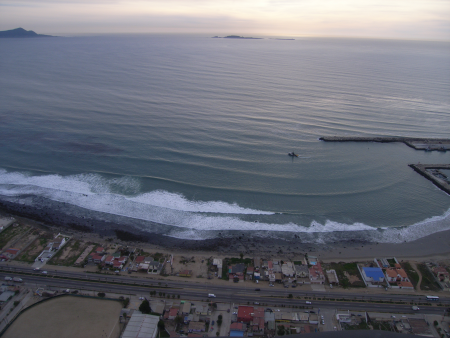
Port expansion within the Bahía de Todos Santos World Surfing Reserve blocked and Oaxaca Working Group for the Protection of Waves and Surf Breaks created.

Big Step Forward in the Azores: First “Municipal Surf Ecosystem Reserve” on Graciosa Island
The first Municipal Surf Ecosystem Reserve on Graciosa Island, Azores has been approved. This recognition constitutes a strategic measure for the protection and integrated management of the island’s surf breaks and natural resources.

New Global Guide Sets Best Practices for Protecting Surf Ecosystems
Three leading conservation organizations — Save The Waves Coalition, the Peruvian Society for Environmental Law (SPDA), and Conservation International — have released the “Guide of Best Practices for Surf Ecosystem Conservation,” the most comprehensive global resource of its kind, funded by the Global Environment Facility (GEF).
BACKGROUND
The Azores Autonomous region (PT: Região Autónoma dos Açores) is an archipelago of nine islands lying on the Mid-Atlantic Ridge.
The Azores archipelago consists of nine volcanic islands located in the North Atlantic Ocean approximately 1300km west of Portugal. Individual islands in the archipelago are spread across 650km and are commonly broken out into the following groups:
Western group: Corvo and Flores
Central group: Faial, Graciosa, Pico, São Jorge, and Terceira
Eastern group: Santa Maria and São Miguel
Its location makes it ideal for swells from both the southern and northern hemispheres. There is a significant surf culture and history, cultivated throughout many generations of locals.
In addition to supporting the Blue Azores Program, Save The Waves is working to supply information for the ongoing efforts of the Azores Surfing and Bodyboarding Association, the Azores chapter of Surfrider Foundation Europe, Terceira Surfing Association and other organizations working on coastal conservation locally.
OUR GOAL
Our objective is to harness the power of the sport of surfing and surf communities to create additional marine protected areas in line with the IUCN 30 x 30 goals in the Azores and incorporate surfing into current protected area management plans.


DEEP DIVE
Surf Conservation Index
A report produced by Save The Waves.
The objective of the Surf Conservation Index is to prioritize individual site locations within the archipelago of the Azores Autonomous Region based on surf quality, human pressure and response, and key social and ecological indicators.
How will this report help protect surf ecosystems? It will:
- Identify activities that affect surf breaks and their surrounding environments.
- Facilitate Coalition-building between different groups of stakeholders
ADDITIONAL RESOURCES

Azores Regional Profile
The Regional Profile of the Azorean Archipelago is the first part of a six-step process which aims to protect critical surf ecosystems throughout the island chain.
It gives a detailed description of the surf resources in the islands, provides critical information on biodiversity and the unique geography that creates surf ecosystems in the Azores, provides important information on the socio-economic aspects of surfing, and assesses the opportunities for conservation of surf spots within the context of ongoing Marine Spatial Planning processes. Click to download.
