COSTA RICA
Save The Waves is working with Conservation International to protect surf ecosystems and promote protected areas across Costa Rica.
Through these efforts, we hope to expand the scope of existing protected areas to include surf ecosystems and create new surfing protected areas in key regions.
BACKGROUND
Costa Rica has been an international surfing destination for decades. Despite its small size (51,100 km), Costa Rica’s Pacific and Caribbean coastlines host many high quality waves that offer unique, year-round surfing opportunities.
A 2018 survey by the National Surfing Federation stated that in 2017, almost 600,000 surfers visited Costa Rica to surf its waves (Fedesurfcr.com, 2018). This suggests that surfing is a pillar of tourism in Costa Rica and plays an important role in the country’s economy by directly contributing to 6.3% of national GDP and indirectly contributing 8.2% (ICT, 2021).
By creating Surf Protected Areas in Costa Rica, surf conservation can become a vehicle to protect areas that wouldn’t be protected otherwise through classic biodiversity conservation. The combination of socioeconomic reliance on surf ecosystems, unique habitats and species they harbor, and influence of surfing in Costa Rica’s tourism sector positions surf conservation as a tool that can help strengthen the network of protected areas in Costa Rica.
In June 2022, Save The Waves dedicated Playa Hermosa as a World Surfing Reserve (WSR). As the first WSR in Central America, Playa Hermosa will serve as an anchor site to build a network of Surf Protected Areas.
Strengthening this alliance between surfers, local actors and the government will help the blue economy thrive while ensuring our marine ecosystems remain healthy for future generations to enjoy.
Ana Gloria Guzman
Executive Director of Conservation International-Costa Rica
OUR GOAL
The objective is to harness the power of surfing and the surf community for conservation efforts. Through Surf Protected Areas, we hope to expand the scope of existing protected areas to include surf ecosystems and create new surfing protected areas in key regions.


Our 'GEF' Work: Surf Ecosystem Management and Blue Economy
The initiative “Expanding the benefits of the blue economy and the conservation of critical biodiversity and ecosystem services through the management of surf ecosystems” seeks to promote the effective management of marine and coastal ecosystems surrounding surf breaks. It aims to ensure the protection of biodiversity and the functioning of these ecosystems, while generating benefits derived from the blue economy in coastal communities in Costa Rica, Panama and Peru.
It is funded by the Global Environment Facility (GEF), implemented by the United Nations Industrial Development Organization (UNIDO), executed by Conservation International (CI), in partnership with Save the Waves (STW) and the Peruvian Society for Environmental Law (SPDA), and coordination with the governments of Costa Rica, Panama and Peru.
Learn more: https://ecosistemasdesurf.net/en/
Beyond The Wave: Preserving The Surf Ecosystem

Tools for Biodiversity
Lesson sharing and capacity building will have special attention in order to replicate project approaches in regions and protected areas of Costa Rica that have foundational elements to allow for application of surf ecosystem management. This includes locations such as Santa Rosa National Park and Baulas National Park in Costa Rica, which have outstanding waves and globally significant biological diversity.

Lessons on Blue Economy
The project will be implemented in key surfing areas in Costa Rica where the protection of important biodiversity and critical ecosystems can reinforce blue economy benefits for local communities, creating a positive feedback loop for increased ecosystem management and motivate further ecosystem conservation. We will provide approaches and tools for decision-makers, local community members and other key stakeholders.
DEEP DIVE
Surf Conservation Index
A report produced by Save The Waves with support from Conservation International.
How will this report help protect surf ecosystems? It will:
- Identify activities that affect surf breaks and their surrounding environments.
- Facilitate Coalition-building between different groups of stakeholders
ADDITIONAL RESOURCES

Azores Regional Profile
The Regional Profile of the Azorean Archipelago is the first part of a six-step process which aims to protect critical surf ecosystems throughout the island chain.
It gives a detailed description of the surf resources in the islands, provides critical information on biodiversity and the unique geography that creates surf ecosystems in the Azores, provides important information on the socio-economic aspects of surfing, and assesses the opportunities for conservation of surf spots within the context of ongoing Marine Spatial Planning processes. Click to download.
SURF PROTECTED AREAS: LATEST NEWS

Surf, Solidarity, and Sustainability on Mexico’s Oaxacan Coast: The Cooperativa Surf Huatulco Project
How a cooperative created protocols, manuals, and alliances to defend waves, beaches, and marine life while driving a sustainable coastal model
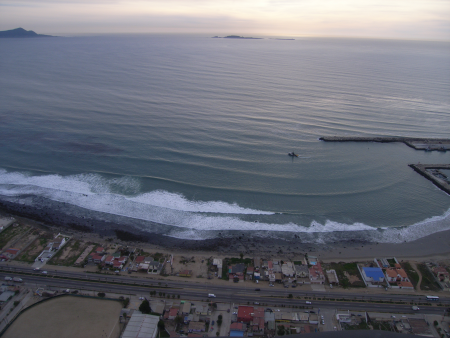
On the Ground Update: Two Major Wins for Surf Ecosystem Protection in Mexico
Port expansion within the Bahía de Todos Santos World Surfing Reserve blocked and Oaxaca Working Group for the Protection of Waves and Surf Breaks created.

Big Step Forward in the Azores: First “Municipal Surf Ecosystem Reserve” on Graciosa Island
The first Municipal Surf Ecosystem Reserve on Graciosa Island, Azores has been approved. This recognition constitutes a strategic measure for the protection and integrated management of the island’s surf breaks and natural resources.

New Global Guide Sets Best Practices for Protecting Surf Ecosystems
Three leading conservation organizations — Save The Waves Coalition, the Peruvian Society for Environmental Law (SPDA), and Conservation International — have released the “Guide of Best Practices for Surf Ecosystem Conservation,” the most comprehensive global resource of its kind, funded by the Global Environment Facility (GEF).
