Local Wins: World Surfing Reserves in Action

Initiatives and action from 14 iconic surf ecosystems

With 14 World Surfing Reserves, our flagship program is a robust network of local communities working to protect and steward surf ecosystems.

Together, our World Surfing Reserves are preserving, stewarding and monitoring 142 surf breaks and 170 miles of coastline globally.

These 142 surf breaks include iconic waves such as Steamer Lane, Punta de Lobos, Snapper Rocks, Zicatela, San Miguel, Ribeira d’Ilhas, Las Flores, Croyde Bay, Todos Santos, and many more. 

And, of course, for our team and partners at Save The Waves, we value everything beyond the wave: the surf ecosystem. If you protect the wave, you protect the place. If you protect the places, you protect the wave.

As 2025 comes to a close, take a moment and scroll below to see the amazing World Surfing Reserve initiatives from this year. 

From plastic pollution, water quality, kids’ education, restoration management, climate resilience and more, every activity makes a difference and helps keep our surf ecosystems protected for future generations. 

You can make a difference too. 

A small donation can make a big impact. Consider contributing a year-end gift – every dollar counts and will help us implement new and important stewardship projects in 2026. Click here to begin your donation!

Punta de Lobos, Chile

Plant restoration and coastal monitoring workshops for youth

The Punta de Lobos World Surfing Reserve, represented by the local organization Parque Punta Lobos, has been hard at work on two projects: expanding their native plant restoration program and educating the community on how native plant restoration ensures a climate resilient coast. 

This year, the team hosted over 150 volunteers at 15 events to introduce 400 new native plants. The restored zones span across nearly an acre of new coastline in front of the surf break of Infiernillo. This work also included the removal of invasive ice plants restoring the coastal surf ecosystem to its native state. Along with the restoration activities, Parque Punta de Lobos has completed 6 education workshops with over 150 local youth using the Save The Waves App as a tool for coastal monitoring.

North Devon, United Kingdom

“Coastal rivers” and water quality

North Devon has continued their groundbreaking water quality work through their “Coastal Rivers Project,” an ambitious initiative to protect the water quality of their surf ecosystems by creating nature based interventions in key areas.

Over 27 interventions have been taken in one watershed alone to improve water quality in the UK’s first and only World Surfing Reserve with 10 more planned in this Combesgate watershed. These interventions are the construction and placement of “leaky willow dams”, baffles and ponds, nature-based solutions that filter surface water pollutants during heavy rains while also collecting plastics and preventing them from reaching the coast. The team is working on a fundraising strategy to implement these interventions in 3 different watersheds across the World Surfing Reserve.

Oriente Salvaje, El Salvador

Environmental education and 'Surfonomics'

The Oriente Salvaje World Surfing Reserve is focused on the next generation: teaching kids and young people how to be the future stewards of the amazing surf ecosystems of El Salvador’s “Wild East” coastline.

Thanks to partners Paso Pacifico and Sociedad Salvaje Salvadorena, over 350 kids have participated in projects across 4 local schools, with lessons on plastic pollution, watershed management, and even helping catalogue the diverse species in the area with “bioblitz” activities.

Additionally, these youth removed 1,682 pounds of trash during beach cleanups and continue to monitor the Oriente Salvaje coastline utilizing the Save The Waves App.

Puerto Escondido, Mexico

“Tequio” and surf ecosystem rehabilitation

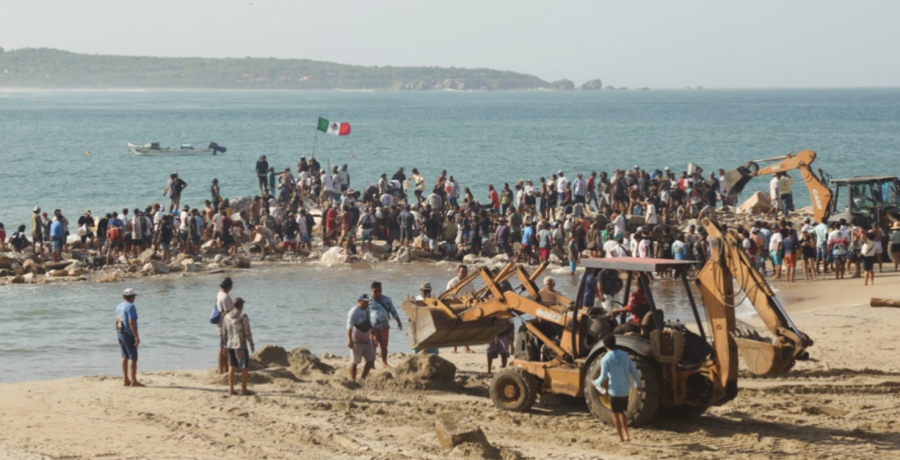
Significant progress has been made at the newly nominated Puerto Escondido World Surfing Reserve in restoring the world class wave at Zicatela. Months ago, when Hurricane Erick made landfall in Oaxaca, the fishing groyne at the north end of the beach was severely damaged. Preliminary studies carried out by a coalition of organizations including Save The Waves, Wildcoast and the Stewardship Council of Puerto Escondido World Surfing Reserve have shown that the groyne may have trapped sand leading to a widening beach and Zicatela, and consequently, deteriorating wave quality and closeout conditions.

Through the community “tequio” hundreds of surfers, fishermen and beach lovers removed many of the remaining rocks to begin restoring the wave of Zicatela back to its original form.

Save The Waves is working closely with the newly assembled Local Stewardship Council to assemble the Reserve Stewardship Plan and planning for the dedication ceremony in 2026.

Playa Hermosa, Costa Rica

Community and climate resilience

Playa Hermosa has continued their critical work in protecting the vital ecosystems of the reserve and providing new data points around the mangrove ecosystems that are essential for the biodiversity of the area and provide enormous contributions to the fight against climate change.

Their latest stewardship project has focused on a first of its kind study documenting the species, extent, and carbon sequestering potential of the mangroves in the Punta Mala Wildlife Refuge. This work in collaboration with biologists, local volunteers, and federal agencies is giving incredibly important baseline information that will help the reserve understand the best strategies for conservation of this area and how the mangroves play an essential role in maintaining the health of the greater surf ecosystem.

This year, the reserve has completed 6 activities documenting and collecting this critically important data.

Santa Cruz, California

"Surf Break Vulnerability" report makes waves

The Santa Cruz World Surfing Reserve was the focus of a groundbreaking study released in September: “Climate Vulnerability of California’s Natural Surfing Capital.”

The report is the result of more than two years of work in the WSR and shows that surfing contributes approximately $194 million annually to the Santa Cruz economy. Additionally, this research incorporated a surf break vulnerability assessment that assessed how sea level rise will impact surf breaks across the Santa Cruz World Surfing Reserve, and the associated economic losses that may occur if adaptive management strategies are not adopted in time. Save The Waves and the WSR hope to leverage this report to further advocate for surf ecosystems protection measures and consideration. 

The World Surfing Reserve continues implementing its stewardship plan in ensuring clean water, addressing climate impacts to waves, and ensuring equitable access to the surf ecosystems.

A surfer rides on a wave as it passes in front of the Lighthouse on the West Side.
Group photo of Save The Waves, Integral and Black Surf Santa Cruz with the "Local Surf Condition Experts" workshop participants.
Aerial shot of West Cliff in Santa Cruz, California.

Guarda Do Embaú, Brazil

Protecting surf breaks through Rio Madre

The Guarda do Embau World Surfing Reserve has continued to focus their conservation efforts on the protection of the Rio do Madre, the heart of the Reserve, as well as enhancing climate resiliency through dune habitat restoration. Through their “Water for Life” monitoring program, the Guarda team has continuously collected critical water quality data providing the surfing community with real time updates on the state of the river. They continue to collect this data with students and volunteers educating the community on the sources of pollution in the river. Most importantly, the Reserve continues to work with the local municipality in designing solutions including the development of a water treatment plant.

Along with their water quality efforts, Guarda is focused on restoring the dune restinga habitat to protect the surf ecosystem and provide resiliency against climate change. This year they recruited 150 people in 2 different native plant restoration activities and workshops and planted over 400 native species.

Gold Coast, Australia

Nature-based coastal management pays off

The Gold Coast WSR continues to set a high standard in maintaining an active coastal monitoring program through the Gold Coast Surf Management Plan.

While Tropical Cyclone Alfred presented many challenges for erosion at the Gold Coast, the innovative sand bypass system, beach nourishment, and dune restoration activities of the World Surfing Reserve proved that nature based active coastal management can show resiliency in the face of climate change and more frequent and intense storms.

The WSR also unveiled new programs including a real time water quality mapping tool and a first of its kind Surf Quality Monitoring Program, a collaboration with Surfline that will give extensive amounts of information and data on how the surf ecosystems change over time and recreational data critical to stewardship and conservation activities.

Manly & Freshwater Beach, Australia

Coalition-building for surf ecosystems

Manly & Freshwater Beach World Surfing Reserve has been very active this year participating in major events and collaborations with state and regional coalitions to find novel ways to protect the surf ecosystem.

The WSR and its Local Stewardship Council was invited to participate in the Boomerang Alliance which is composed of 55 local, State and National environmental groups who come together to give local communities power and influence to stem the massive waste of discarded resources polluting Australia’s natural resources and beaches.

They also hosted the Save The Waves Film Festival in collaboration with Surfrider Foundation raising important resources for the Reserve and continuing to expand their coalition in the stewardship of coastal resources in Manly & Freshwater.

Noosa, Australia

Education, safety and stewardship visions

The team at Noosa World Surfing Reserve has continued their important stewardship work that has focused on emergency preparedness and surfer education through signage and marketing campaigns to ensure the world class waves at Noosa remain safe, accessible and enjoyable for everyone.

Additionally, the team has drafted their latest version of a Surf Management Plan that is being considered for adoption by the Noosa council as part of a broader tourism destination planning effort. If adopted, the Noosa World Surfing Reserve could implement a new stewardship vision that includes coastal resiliency projects, nature-based solutions and water quality testing and monitoring.

Along with their sister WSR partner Gold Coast, the Noosa team is working with the state government to approve legal protection strategies for the 2 World Surfing Reserves in Queensland. 

Huanchaco, Peru

Cultural heritage and totora restoration

As the first World Surfing Reserve in Latin America, Huanchaco has continued its mission to protect the waves and cultural heritage of the surf ecosystem.

In the past couple of years, the WSR has transitioned to a strategy of restoring and protecting the famed totora ponds that create the reeds necessary for the ancient fishing/surfing craft for the fishermen, and also create coastal resiliency and blue carbon benefits for the region.

In partnership with Conservation International, the World Surfing Reserve has restored 13 totora ponds this year and continues their coastal monitoring program that provides critical information on how the totora ponds are providing coastal resiliency and biodiversity in the surf ecosystem.

Huanchaco

Bahia Todos Santos, Mexico

Port project opposition and grassroots unification

The Bahia de Todos Santos World Surfing Reserve has stepped up in its community leadership and, together with its Committee integrated into the Ensenada Digna collective, has strengthened its opposition to the extension of the ports of El Sauzal and Ensenada that would completely destroy the 3 Emes surf break and potentially impact the world-class wave of San Miguel. While a port project has always been a lingering threat to the Reserve, recent developments in project plans have signaled that the process to build the infrastructure is imminent. At the same time, a parallel effort has begun to designate Bahía de Todos Santos as a biocultural heritage site—an initiative that the Reserve strongly supports, even though it is not the leading entity in that process.

However, through the grassroots community organizing of the Reserve, the Salvemos el Sauzal movement, Ensenada Digna, and the strong support of the local surfing community, the process to extend the port has been delayed, and the coalition the Reserve has helped build has even garnered the attention of the Mexican president, who publicly stated the government would not build something the people did not want. Their efforts show that when a community unifies around the protection of a surf ecosystem and has the distinguished backing of a World Surfing Reserve, these large infrastructure projects that destroy waves can be stopped.

Malibu, California

Prioritizing the surf ecosystem for future waves

The Malibu World Surfing Reserve continues to focus its efforts on the protection and management of the lagoon and rivermouth that make this historic wave and ecosystem function.

As one of the world’s most iconic point breaks, ongoing monitoring, management and restoration of the creek and rivermouth are critical to protecting the ecosystem and irreplaceable surf break.

With ongoing collaboration and partnerships developing between community members, California State Parks, and other agencies, the World Surfing Reserve is positioning itself as a key voice in ensuring that the surf ecosystem is prioritized as new plans including an effort to remove a dam farther up the watershed are pursued.

Ericeira, Portugal

Land-to-sea protection for coastal zone

The Ericeira World Surfing Reserve has continued in its stewardship goals to proactively protect the land-sea interface and reign in development, protect water quality, manage and support the surfing economy and community, and work towards policy mechanisms that formally protect the surf ecosystem in law. Recently, the Municipality of Mafra has worked with the other Local Stewardship Council members to protect and restore one of the last undeveloped coastal spaces near the waves of Prai de Empa and Ribeira d’Ilhas. Through this work, the WSR has protected 4 kilometers of the coastal zone and restored 6 different species of native plants in an area of 12 hectares with an expansive native plant restoration intervention planned in 2026.

Want to support the local initiatives that protect coastlines across the globe?

Help us raise $100,000 by the end of the year!

Any contribution – from $25 to $100 – makes a difference and will help our World Surfing Reserve program have an even greater impact in 2026. 

Scroll to Top

Become a Coalition Member

Give a gift, receive a gift: