

We haven’t even gotten through 2 months of 2026, and there have been two major wins for surf ecosystem protection in Mexico. In Ensenda, the president of Mexico announced that plans for a port expansion that threatened waves within the Bahía de Todos Santos World Surfing Reserve will not proceed. And in the state of Oaxaca, the government has endorsed the creation of a Working Group for the Protection of Waves and Surf Breaks and invited Save The Waves to be a permanent member of the committee. Both of these wins are the product of years of on-the-ground work with communities and local partners.
Victory for Ensenada: Mexico’s President Announces El Sauzal Port Expansion Will Not Proceed; Bahía de Todos Santos World Surfing Reserve Leads Wave Defense
After months of citizen mobilization, campaigns and formal petitions, Mexico’s President Claudia Sheinbaum publicly announced that “in Ensenada we will no longer carry out the port expansion” at El Sauzal due to the multiple problems associated with the project. This official statement marks a crucial advance: collective action —including a change.org petition led by Ensenada Digna that has reached 25,238 signatures— and coordinated technical and community advocacy have halted a mega‑project that would have threatened biodiversity, fisheries and local quality of life.
Ensenada Digna and the WSR Bahía de Todos Santos (WSR‑BTS), together with a coalition of experts in environmental law, urban development, tourism, fisheries, oceanography and public health, were instrumental in exposing the project’s potential impacts: loss of giant kelp forests and productive benthic species (sea cucumber, sea urchin, lobster, conch, sardine), harm to bluefin tuna ranching operations, increased heavy‑truck traffic, ammonia leak risks, pressure on urban services and continued discharge of untreated sewage to the sea. Many of these concerns mirror those that led to the cancellation of a similar proposal in 2010 on environmental grounds.
The presidential decision and the collective effort represent a victory for the protection of the region’s iconic waves — Tres Emes, Beans, Stacks, San Miguel, Killers at Isla Todos Santos and Salsipuedes — and for the social and economic values they sustain (blue economy, sustainable tourism and local livelihoods). WSR‑BTS’s leadership was key in uniting communities, fishers, scientists, producers, and cultural actors into a common front of defense.
Looking ahead, the WSR‑BTS committee will maintain vigilance over any project that could threaten the coastline and surf breaks, continuing to deploy technical evidence and institutional advocacy as needed. Throughout 2026 the committee is also updating its Stewardship Plan to integrate STW´s new Guidelines and Best Practices as a technical and operational reference —a management model that can serve other existing and emerging World Surfing Reserves.
Strategic partnerships with organizations such as WWF, Pronatura Noroeste and OCEANA have strengthened WSR‑BTS’s technical and legal capacity to design and implement defense strategies for surf ecosystems in Mexico and beyond.
This outcome demonstrates that science, community mobilization, institutional alliances and public pressure produce real change. We remain organized and vigilant to ensure Ensenada’s waterfront, bay and surf breaks are preserved as natural, cultural and economic heritage for present and future generations.
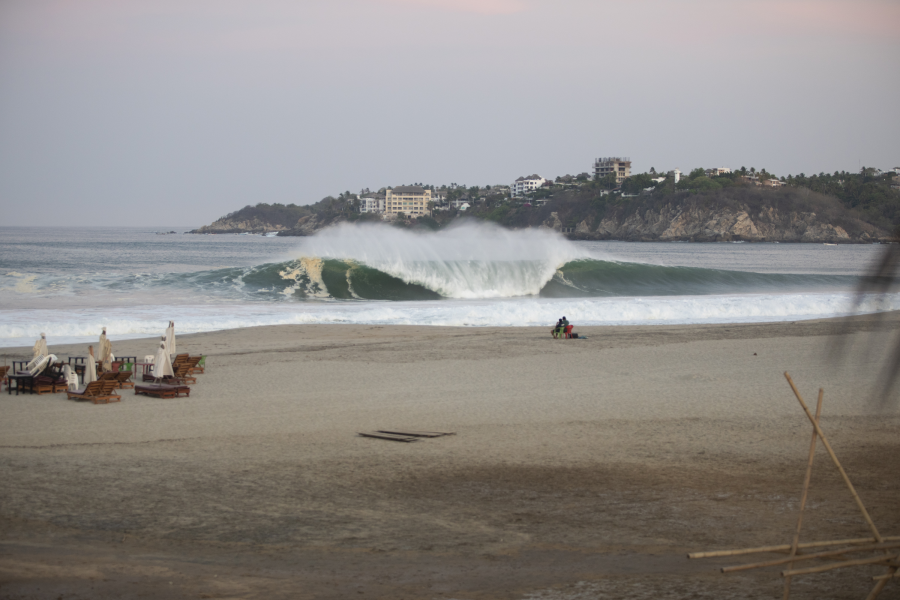
Photo Puerto Escondido, Oaxaca by Edwin Morales
Major Step Forward in Oaxaca: CEHCO Approves Permanent Role for Save The Waves and Creates Mexico’s First National Working Group to Protect Surf Breaks and Waves.
Oaxaca, México.- At the first 2026 session of the State Council of Coastal Wetlands of Oaxaca (CEHCO), the chair approved a permanent invitation for Save The Waves Coalition (STW) and endorsed the creation of the Working Group for the Protection of Waves and Surf Breaks (GT‑POR), together with its 2026–2028 work plan. This decision marks a milestone: it is the first technical group in Mexico specifically dedicated to protecting surf ecosystems and their breaks.
The approved Work Plan sets a clear roadmap to integrate surf breaks into environmental planning using technical and participatory methodologies (Logical Framework/, Surfonomics, satellite mapping and workshops), rigorous monitoring and measurable results. The vision is ambitious: to recognize and protect surf breaks and surf ecosystems in Oaxaca for their ecological, cultural and socioeconomic value, and to incorporate them into public policy and blue economy strategies that benefit coastal communities.
Priority actions for 2026 include promoting surfing as a pillar of the blue economy, the participatory design of the First World Surfing Reserve in Puerto Escondido (roadmap and 10‑year management plan), community projects linked to local governance, and hosting the 2026 World Surf Conservation Conference. The plan also includes technical assessments and Ramsar nominations for Salinas del Marqués and Punta Colorada, biodiversity studies and Surfonomics research to highlight the economic value of surfing.
GT‑POR is composed of community, academic and conservation organizations, with STW serving as the technical/advisory lead. Participating entities include Fondo Oaxaqueño, SOS Puerto Escondido, OPTUR and the Union of Societies of the Red de los Humedales de la Costa de Oaxaca, with a formal opening for new members who meet technical and community participation criteria.
“This achievement reflects years of collaborative work and provides a unique platform to protect surf breaks, mangroves, sea turtles and marine mammals along the Oaxacan coast in an integrated way. It is the start of a strategy that links conservation, local livelihoods and sustainable tourism,” said Armando Efraín Olachea, STW Coordinator in Mexico.
The creation of GT‑POR ensures cross‑sector coordination with other conservation efforts (mangroves, cetaceans and reefs), enables the production of technical inputs for decision‑making, and opens the door to legal protection instruments and community governance models. CEHCO and the Working Group will use a Results Indicator Matrix to measure progress, ensure accountability, and guarantee community participation at every stage.
Save The Waves welcomes this decisive step and reaffirms its commitment to support plan implementation, strengthen local capacities, and promote the effective protection of surf ecosystems in Oaxaca. We will continue working with communities, authorities and partners to turn this strategy into concrete, on‑the‑ground results.
For more information about the Working Group, the approved plan, and collaboration opportunities, please contact Armando Efraín Olachea: efrain@savethewaves.org.

